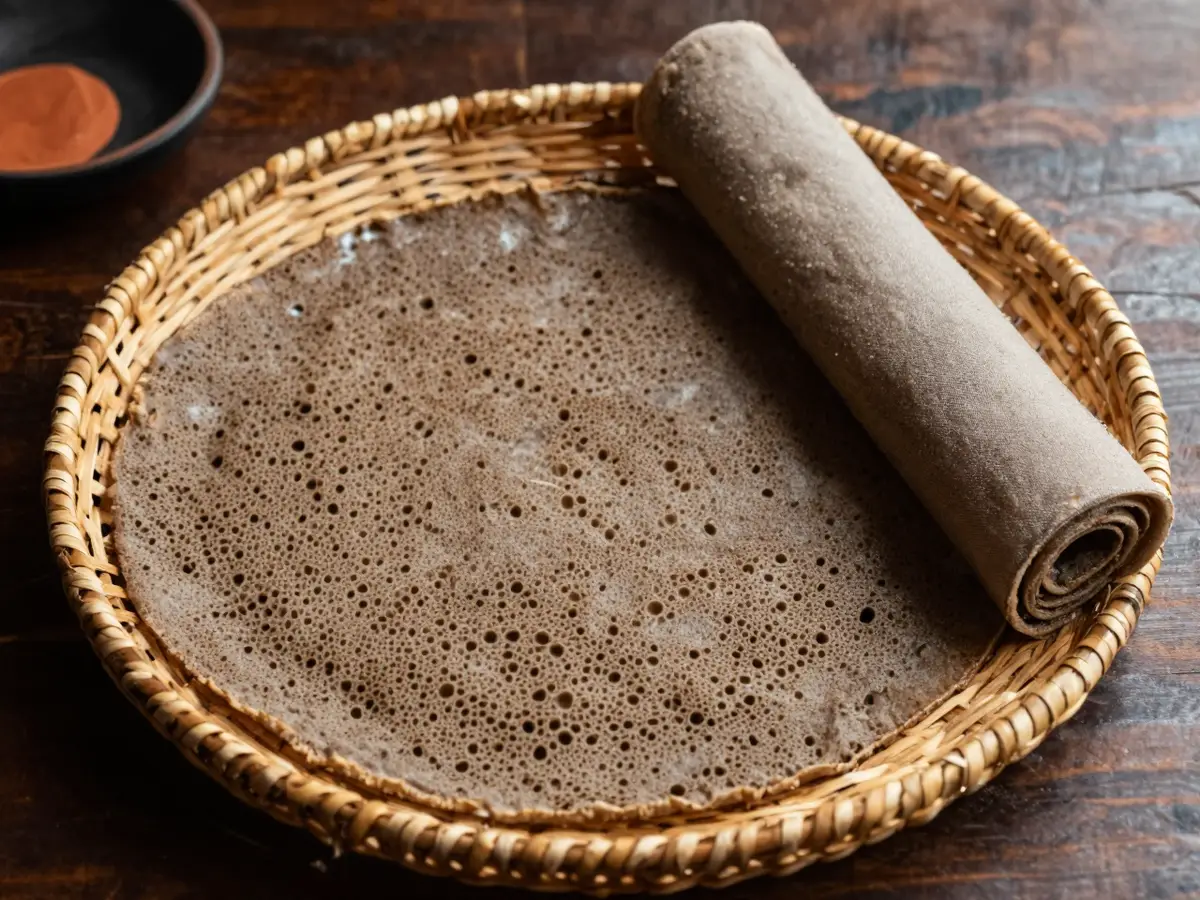
Home · Recipes · Injera, fermented teff flatbread
Ethiopian · Sides
Injera, fermented teff flatbread
100% teff · fermented for days · spongy and sour
AI-generated photograph
- Total1 hour
- Prep20 minutes
- Cook40 minutes
- Serves4
Injera is the soft, spongy, gently sour flatbread that is plate, spoon and bread at an Ethiopian table, baked on one side only on a mitad (a wide clay griddle) until its top is covered in tiny holes. Ours is made with 100% teff, a tiny grain with no gluten; many restaurant injera are not gluten free, because teff is costly and hard to work, so cooks often mix in wheat, barley or self raising flour.
Contains: none of the 14 allergens, as written. None of the 14 allergens is in this recipe as written: teff flour, yeast, salt and oil contain none. Teff has no gluten, but it can be milled where wheat is, so buy teff flour labelled gluten free. Bought injera often contain wheat or barley (gluten), so always check before serving someone who must avoid gluten.
Let's cook
- Day one. In a large glass or ceramic bowl, whisk the teff flour and yeast with 450ml lukewarm water to a smooth, thin batter. Cover loosely with a clean tea towel and leave at room temperature.
- Leave it for 2 to 3 days, stirring once a day. The batter separates, a layer of yellowish water rises to the top and it smells pleasantly sour, a little like sourdough. That sourness is the taste of injera. The warmer the kitchen, the faster it goes.
- On baking day, pour off most of the water on top and stir the batter well. Make the absit: put 150ml of the batter in a small pan with 150ml water and stir over a medium heat for 2 to 3 minutes until it thickens to a paste. Stir it back into the bowl. This is what gives injera its soft, springy body.
- Stir in the salt and enough water to make a batter as thin as single cream, about 100 to 200ml. Cover and leave for 30 to 60 minutes until small bubbles appear on the surface.
- Heat a 26 to 28cm non stick frying pan with a lid on a medium heat. Wipe it with a little oil on kitchen paper; it should be barely greased.
- Pour in a ladle of batter in a spiral from the outside in, then tilt the pan so it covers the base thinly. Cook uncovered for about 1 minute until holes, called eyes, open all over the surface.
- Put the lid on and cook for 1 to 2 minutes more, until the top is dry and no longer shiny and the edges lift from the pan. Never turn it: injera is cooked on one side only, and the underside should be smooth, not browned.
- Slide it onto a clean tea towel, let it cool for a minute, then lay the next on top as they are cooked. Wipe the pan with oil only if the injera starts to stick. Makes about 8.
Tips
- If your injera tear or have no eyes, the batter is too thick: whisk in a splash of water. If they are gummy, cook them a little longer under the lid.
- Stack the cooled injera in a food bag at room temperature and eat within a day, or freeze them between sheets of baking paper for up to a month. Warm them briefly in a covered pan.
- Keep a cup of the sour batter in a jar in the fridge for up to a week and stir it into your next batch: it ferments faster and tastes deeper.
Swaps
- Quicker: buy injera from an Ethiopian shop, but read the label, as most shop injera include wheat or barley flour.
- Milder: ferment it for just 1 day for a softer, less sour injera.
Our own recipe. The photograph is AI-generated.
From the same kitchen
What goes with it.
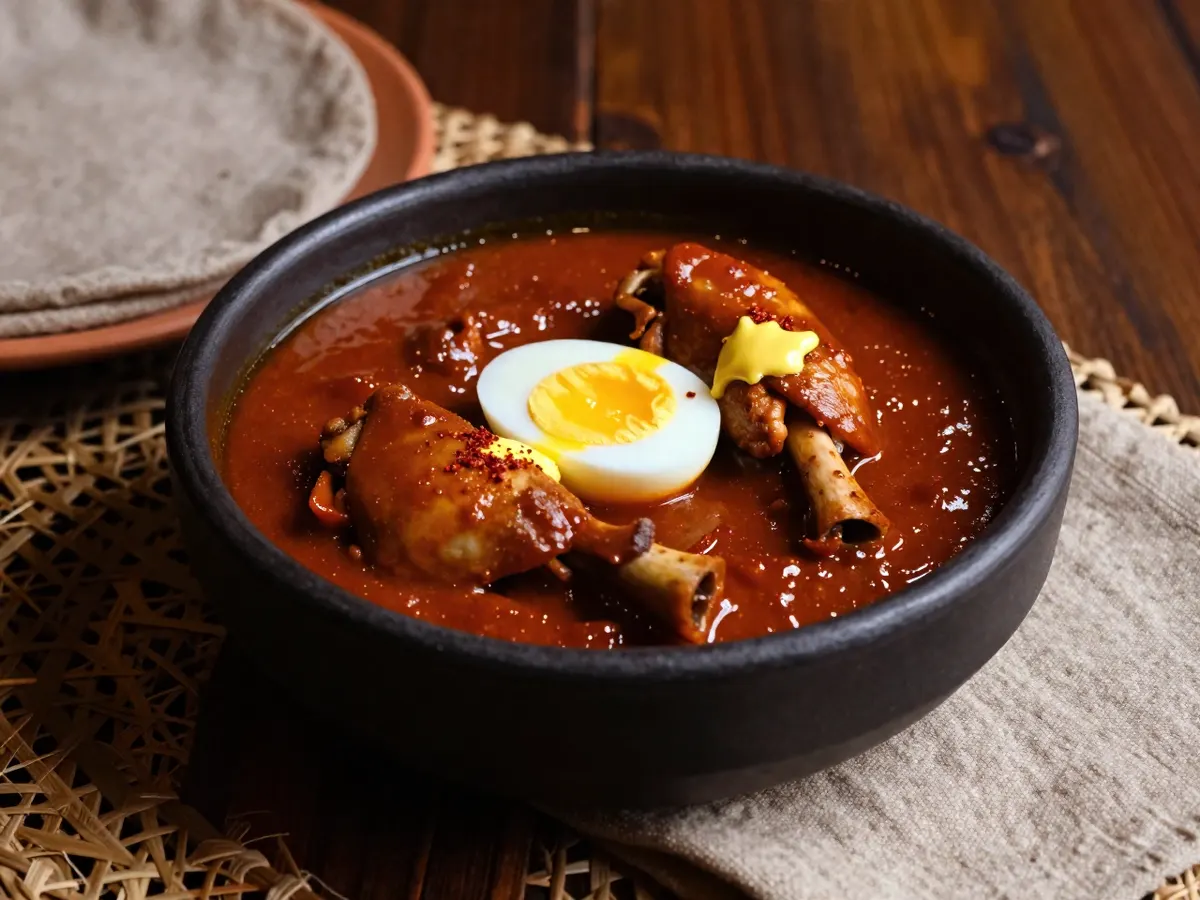
A main
Doro wat, chicken and egg stew with berbereslow cooked onions · berbere and spiced butter · chicken and egg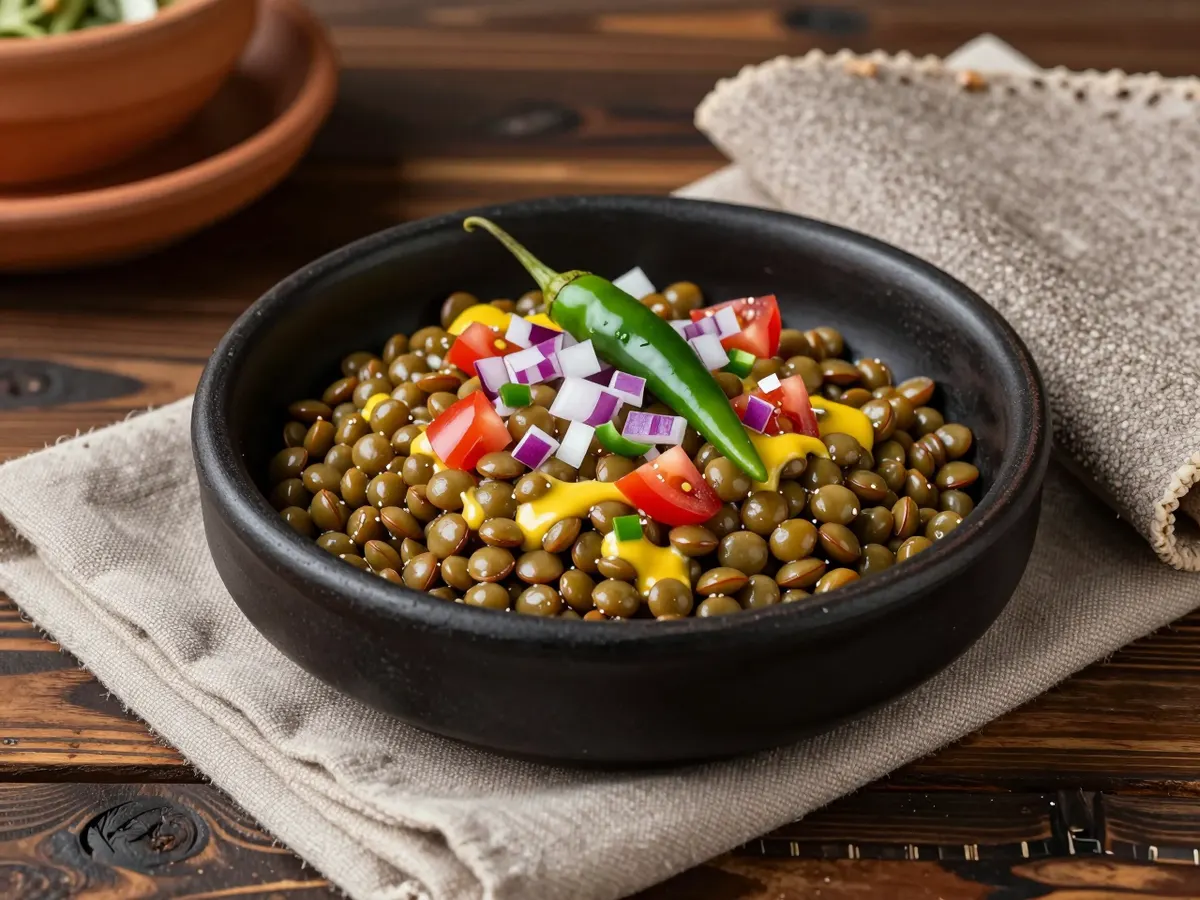
To start
Azifa, green lentil salad with mustard and lemongreen lentils · ground mustard seed · lemon and chilli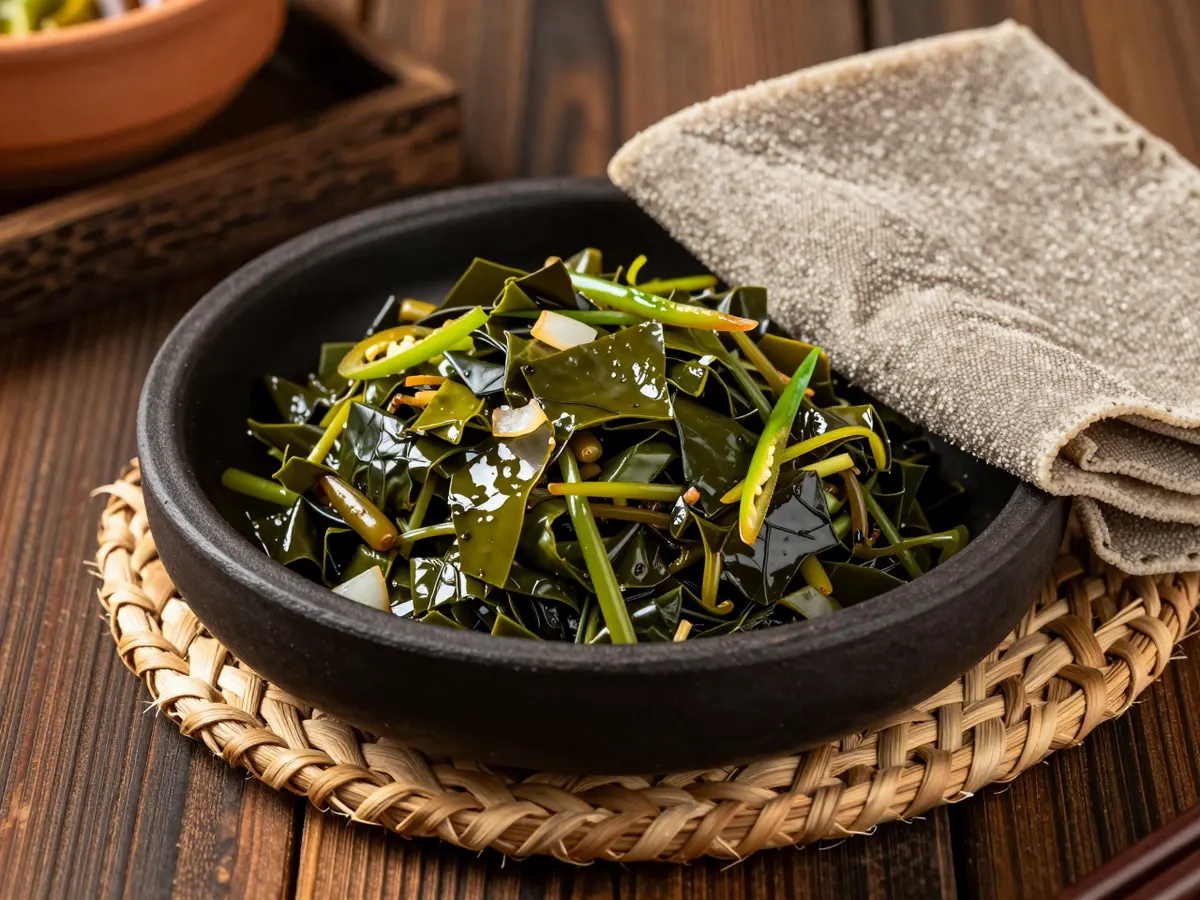
On the side
Gomen, collard greens with garlic and gingercollard greens · garlic and ginger · green chilli